Best Tips for Moving With Kids Without the Stress?
TM
Written by TheMoveTips Editorial Team
Updated 6 min read
Quick Answer
Involve your children early in the planning process to reduce anxiety and build excitement about the new home.
Expect to add at least 20 percent more time to your packing schedule when children are helping or needing your attention.
Keep an essentials bag with enough supplies for 3 days to maintain their daily routine during the chaos of transit.
Moving across state lines is hard enough without the added weight of keeping your family stable during the chaos. Most parents underestimate the time required to manage both the household inventory and the emotional needs of their children.
You should plan for your move to take roughly 20 percent longer than a move without children. This extra buffer accounts for the frequent interruptions and the necessity of maintaining sleep or meal routines for your little ones.
How to prepare your children for the big change
Children often fear the loss of familiarity more than the actual move. You can ground them by talking openly about the upcoming change weeks before the professional crew arrives.
Talk about the move as an adventure
Focus on the positive aspects of the new location rather than the logistics of the move itself. Ask them what they want their new bedroom to look like or which local park they want to visit first. This gives them a sense of agency in a process where they otherwise feel like bystanders.
Keep their routines in place
Structure is your best friend when everything else feels unstable. Try to keep bedtimes and meal times consistent even while boxes occupy every corner of your living room. A child who is well rested handles the stress of packing and the final travel day significantly better than one who is overtired.
Involve them in the packing process
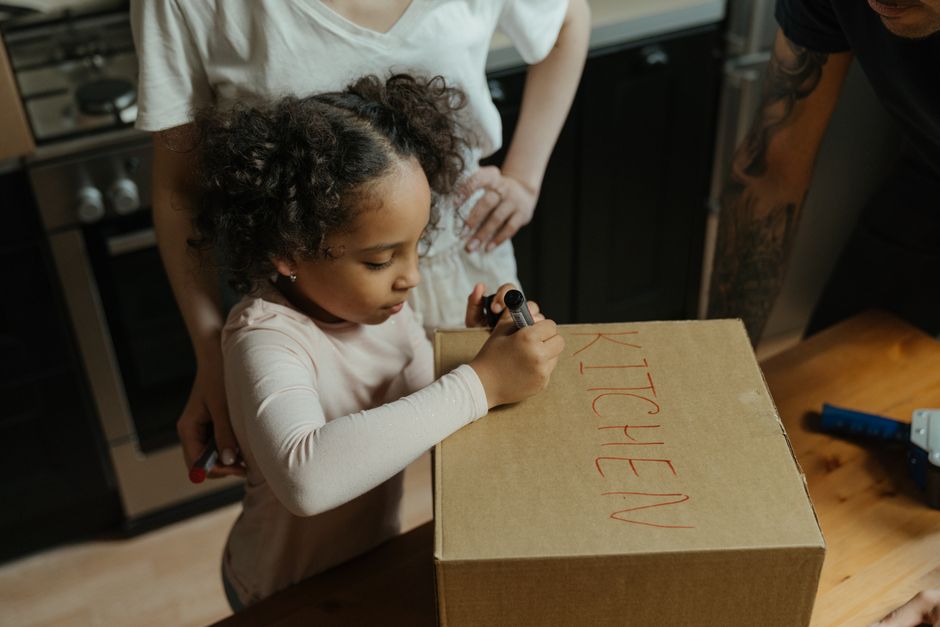
Let them pack a box of their own special items that will stay with them in the car or on the plane. Having control over their favorite toys or books helps them feel secure when their room is otherwise being dismantled.
Everything you need to know about professional transport is available when you try our moving cost calculator to see how much your specific move might cost.
What are the best strategies for packing with kids around
Packing a house while caring for children requires a split strategy. You need time to focus on complex items while keeping the kids occupied or supervised in a safe area.
Schedule packing during nap times
Use the quiet hours of the day to tackle the high focus areas like the kitchen or home office. These areas contain fragile items or important documents that are dangerous for little hands to touch. Save lighter tasks like labeling boxes or sorting clothes for when the kids are awake and can participate.
Create a child free zone
Designate one room in the house as a no pack zone. This room remains the kids space until the very last day of your move. It serves as a sanctuary where they can play without being surrounded by bubble wrap or heavy boxes.
Use a moving box inventory
Label every single box by room and priority level. You will thank yourself when you arrive at the new house and need to find the box with the bed sheets or the coffee maker at 10 at night. Organization reduces the frantic searching that often leads to short tempers.
If you hire professional help, verify the mover has a clean record. You can file a complaint about a moving company for free through the FMCSA National Consumer Complaint Database if you encounter deceptive behavior.
Check out the table below to understand how typical move sizes and distances influence your planning timeline.
Move Size
Average Packing Time
Average Transit Time
Estimated Cost Range
Studio Apartment
1 to 2 days
1 to 3 days
$1,200 to $2,500
2 Bedroom Home
3 to 5 days
3 to 7 days
$3,500 to $6,000
3 Bedroom Home
6 to 10 days
5 to 10 days
$5,000 to $9,000
4 Plus Bedroom Home
10 plus days
7 to 14 days
$8,000 plus
How do you manage the trip to the new home
The physical journey is the final hurdle in your transition. Whether you are driving or flying, preparation remains the key to avoiding a meltdown during the transit phase.
Pack a survival bag
Include clothes, toiletries, medicine, and comfort items for 3 days in one bag that travels with you. Do not let this bag go on the moving truck. You want everything your children need for their first few nights to be immediately accessible.
Plan stops for energy release
If you are driving, plan your route to include stops at playgrounds or open parks. Kids need to move their bodies to remain calm during long hours in a car seat. A quick 30 minute break can save you hours of frustration later in the day.
Stick to your food plan
Carry healthy snacks that do not lead to a sugar crash. Pack a cooler with sandwiches, fruits, and plenty of water. Having consistent food options prevents the irritability that comes from hunger and keeps your travel schedule on track.
You should always verify a mover's license before you pay a deposit to ensure they are legitimate interstate operators.
What legal protections do you have for your move
Protecting your belongings is just as important as protecting your children during a move. You must understand the rules that govern the industry to ensure your family does not fall victim to bad actors.
Know the difference between brokers and carriers
A moving broker arranges your move but does not do the physical moving itself. Brokers must disclose their status as a broker rather than a carrier before you book. Ensure you have the name of the company that will actually handle your items.
Understand your dispute options
All interstate household goods movers are legally required to participate in an arbitration program to resolve disputes over loss, damage, or disputed charges. They must summarize this program in writing before you sign the bill of lading. Do not skip reading this summary.
Keep your paperwork organized
Save every estimate, receipt, and contract in a physical folder. If a dispute arises, having a written record of what was promised versus what was delivered is your primary defense. If you need more guidance on costs, you can browse more cost guides to prepare your budget.
Should I hire professional packers when moving with children?
Hiring professional packers can significantly reduce your stress levels if your budget allows for the extra service. It frees up your time to focus on the emotional needs of your children during the packing phase.
How do I handle the last few nights before the move?
Try to maintain your normal bedtime rituals even if you are sleeping on mattresses on the floor. Keeping a consistent environment helps children feel secure despite the disruption of their physical space.
What if my child has an emotional breakdown during the move?
Acknowledge their feelings and let them know it is normal to feel sad or scared about leaving. Give them space to express their emotions and reassure them that their comfort items are safe.
Preparation is the best way to keep your family grounded throughout the moving process. Take a moment to verify your mover and finalize your budget so you can focus on the next chapter of your family life.