Start talking about the move with your children at least one month before the transition to help them process the coming change.
Pack an essential box for each child containing their favorite toys, comfort items, and school supplies to keep them occupied.
Prioritize setting up your children's bedrooms first at the new house to provide them with a familiar and secure home base immediately.
Moving your entire household is rarely simple, but doing it with children adds layers of complexity that require a thoughtful strategy. Whether you are moving across town or across the country, managing the emotional and physical needs of your kids is just as important as packing the kitchen or hiring professional help.
Successful transitions depend on how well you prepare your family for the disruption of their daily routines. Children often experience anxiety when they lose their sense of security, so keeping them informed and involved can significantly lower the stress for everyone.
How to talk to kids about moving
The secret to a smooth move is starting the conversation early. Avoiding the topic until moving day often leads to confusion or resistance, so give your kids time to adjust to the news at their own pace.
Keeping the message simple
Focus on the positive aspects of the move while acknowledging their feelings. For younger children, emphasize that the whole family is staying together and that their belongings will be in the new house. You should avoid overcomplicating the logistics, as young minds thrive on simple, reassuring facts.
Involving them in the process
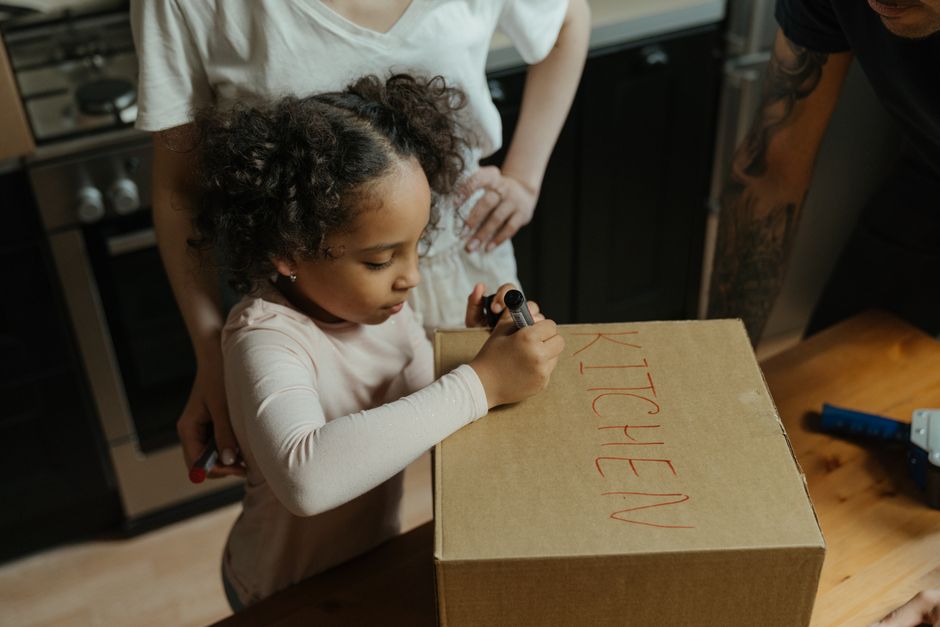
Giving children small, age appropriate tasks helps them feel like participants rather than observers. Let them decorate their own moving boxes or choose which items go into the donate pile. Empowerment reduces the feeling that their world is being turned upside down without their consent.
Transitioning from those initial conversations to the physical packing process requires a change in your daily workflow.
How to manage packing with kids
Packing boxes takes hours of concentration, which can be difficult when you are also parenting. Many families choose to alternate between packing and engaging the children to prevent everyone from feeling ignored or overwhelmed.
Creating a familiar space
Designate a corner of the home as a kids zone that remains untouched until the final hours. Keep their most treasured toys and books in this area to provide a reliable comfort zone amidst the sea of cardboard. You can try our moving cost calculator to see how professional packing services might fit into your budget if you find that balancing work and parenting is too much to manage alone.
Handling the move timeline
The following table provides a realistic look at how a standard move progresses for families.
Phase
Timeframe
Focus for Kids
Planning
4 to 6 weeks out
Talk about the move and set expectations
Decluttering
3 to 4 weeks out
Let kids choose what to donate
Packing
1 to 2 weeks out
Label boxes with the kids and pack essentials
Moving Day
Day of event
Safe zones and entertainment kits
Maintaining a consistent schedule during the final week will prevent late night meltdowns and keep your productivity steady.
What to do on moving day
Safety is your primary concern when heavy furniture is moving through hallways and strangers are entering your home. If possible, designate a specific room where the kids can stay, or better yet, have a friend or family member watch them while you oversee the loaders.
Building an essentials kit
Create a special box or bag for each child that stays with them in the car or the cabin of the moving truck. This bag should include snacks, tablets, favorite stuffed animals, and any items they need for school or bedtime. Having these items accessible means you never have to scramble through dozens of boxes just to find a teddy bear.
Saying goodbye
Taking the time to say a proper farewell to the old house can provide closure. You might take a final walk through every room to talk about the memories made there, or even record a short video of the children sharing their favorite parts of the home. This simple activity helps them process the transition before the new chapter begins.
Before you finalize your hire, ensure you are working with a reputable company. You can verify a mover's license to protect your family from predatory operators who might withhold your belongings.
How to help kids adjust to a new home
Once you arrive at your new destination, the physical setup becomes the priority. Most experts agree that you should aim to get your children's bedrooms assembled before anything else.
Setting up the bedrooms first
Walking into a room that looks like their old one provides an instant sense of security. Make sure their beds are made and their favorite posters or wall art are hung early. If they sleep well on the first night, they will be much more adaptable the following day.
Under a non binding estimate, a mover cannot require you to pay more than 110 percent of the estimated amount at delivery. Any remaining balance can be billed later, typically within 30 days.
Maintaining old routines
Stick to your usual meal times and bedtimes immediately upon moving into the new space. Consistency acts as an anchor for children who are still learning the layout of a new neighborhood. You can browse more cost guides to help plan for the eventual costs of setting up a new room or child friendly backyard upgrades.
It is usually better to have children stay with a family member or friend on the actual day of the move. This keeps them out of the way of heavy lifting and prevents them from getting stressed by the chaotic environment.
How do I handle school changes for my children?
You should contact your new school district as early as possible to gather enrollment requirements and tour the campus. Involving your children in the tour can help them feel excited about the new environment rather than anxious about the social change.
How do I prevent my kids from feeling anxious during the transition?
Maintain as much of your regular daily routine as possible while keeping the lines of communication open. Reassurance and physical comfort items go a long way in helping children feel stable as you relocate your family.
The most important step is to keep your children involved and informed throughout the process. Start your research early, check your mover's credentials, and focus on creating a comfortable environment from day one.