Involve children early to reduce anxiety by explaining the change in simple terms.
Prioritize setting up their bedrooms and play spaces immediately upon arrival to establish familiarity.
Keep an "essentials bag" for each child containing snacks, toys, and comfort items to minimize chaos on moving day.
Moving your family to a new home is one of the most stressful experiences you can undertake. When you add children to the mix, the logistics become more complex. You are managing boxes, movers, and emotional transitions all at once. The good news is that planning ahead makes a massive difference in how your kids process the change.
Most parents find that talking about the move as early as possible sets the right tone. Whether you are moving across town or across the country, children thrive on predictability. You do not need a perfect plan, but you do need a strategy that keeps their emotional needs front and center.
How should you prepare your children for a big move?
Start the conversation early
Information is the best way to combat fear. Start talking about the upcoming move as soon as you have a clear timeline. Use simple language for younger kids, focusing on the fact that the family is moving as a team. Explain that their toys, books, and family members are all coming along.
Validate their feelings
It is normal for children to feel sad about leaving a home. Let them express their frustration or anxiety without trying to fix it immediately. Acknowledging their feelings helps them feel heard during a time when they might feel like they have no control.
Create a visual timeline
Children often struggle with abstract time concepts. Use a calendar to mark the days until the move. Watching the days go by helps them anticipate the change rather than being surprised by it.
Understanding how to keep your family grounded during this transition is just as important as hiring the right professionals. Try our moving cost calculator to see how your budget holds up against various service levels before you commit.
How do you pack without losing your mind?
Gamify the packing process
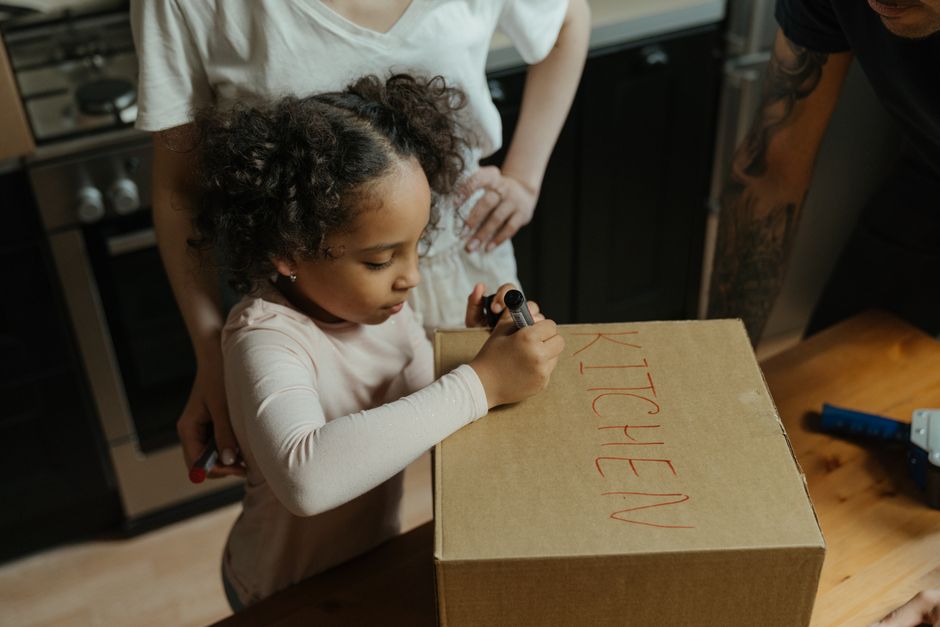
Turn sorting and packing into a game to keep kids engaged. Let them decorate their own boxes or help choose which toys get packed first. When children feel like contributors, they are less likely to view the move as something happening to them.
Keep the essentials accessible
Never pack your child’s most important items in the general pool of boxes. Keep a designated "go bag" that includes favorite stuffed animals, pajamas, tablets, and snacks. You want these items available the moment you arrive at the new house.
Clear out the clutter together
Moving is the perfect excuse to downsize. Involve your kids in deciding which old toys to donate or give to friends. Giving them the power to choose items for donation creates space in your new home while teaching them about generosity.
Transitioning to a new location can be overwhelming, so focusing on small, manageable tasks keeps your momentum moving forward. You should also browse more cost guides to ensure you are budgeting for every stage of the process, including potential packing services if the job gets too big.
What are the best tips for moving day safety?
Designate a safe zone
On the day the movers arrive, designate one room as the off limits area for the moving crew. This serves as a quiet retreat for your children. Keep their favorite books or electronics in this space so they can stay occupied while the heavy lifting happens elsewhere.
Hire a sitter if possible
If your budget allows, having a trusted friend or babysitter watch the kids for the day is a lifesaver. You can focus entirely on directing the movers and inventorying your items. This removes the stress of keeping eyes on small children while heavy furniture is being moved.
Prepare for the unexpected
Moving day rarely goes exactly as planned. Be prepared for delays by having extra meals, water, and activities ready to go. When you are prepared for minor setbacks, they rarely turn into major meltdowns.
All interstate household goods movers are legally required to participate in an arbitration program to resolve disputes over loss, damage, or disputed charges, and must summarize this program in writing before you sign the bill of lading.
Maintaining a calm environment allows you to monitor the move more effectively. When you work with professional movers, always verify a mover's license to ensure they are legitimate.
How do you help kids settle in quickly?
Prioritize their bedrooms
Do not worry about the kitchen or the living room immediately. Set up your children’s beds and arrange their furniture first. Sleeping in a familiar space on the first night makes the biggest difference in their comfort level.
Explore the new neighborhood
Once you are unpacked, go for a walk to find the nearest playground or ice cream shop. Establishing new traditions helps turn the new house into a home. These small activities help them form positive associations with the new area.
Maintain old routines
Try to keep dinner times and bedtime schedules as consistent as possible in the first week. Routine provides a sense of security when the physical environment has changed. Consistency is the best tool you have for a smooth transition.
How do I know if my kids are too young to understand a move?
Children as young as toddlers can feel the change in energy even if they do not understand the concept of a new home. Focus on keeping their daily routines stable and providing lots of physical affection during the packing process.
Is it better to let kids pack their own toys?
Giving kids a small box to fill with their own things builds a sense of agency and reduces fear about losing their favorite items. Make sure you supervise them so you do not accidentally lose important pieces or pack items they will need before the move is over.
Should I visit the new school before we move?
Visiting a new school or community center before moving day helps demystify the new environment. Seeing the playground or the classroom turns a scary unknown into a place they can start to visualize as part of their future.
Taking the time to involve your children will make the entire process feel less like a crisis and more like an adventure. Review your options and prepare your moving day plan now to ensure a smoother transition for your whole family.